-
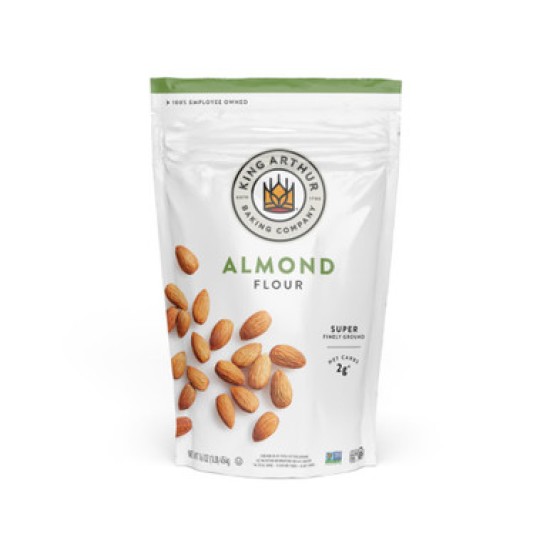
To make the macaron shells: Weigh your almond flour; or measure it by gently spooning it into a cup, then sweeping off any excess.
-
Process the almond flour and the confectioners' sugar in a food processor for 20 seconds. Sift to remove any large pieces and to aerate the mixture.
-
Separate the eggs and put the whites in the bowl you'll use to whip them. Don't start whipping yet, but add the salt and cream of tartar.
-
In a small saucepan, combine the water and granulated sugar. Stir over medium heat until the sugar dissolves, then bring to a rapid boil.
-
Boil for 2 minutes; the temperature of the syrup should reach between 235°F and 240°F on a candy or digital thermometer. Take the syrup off the heat. Immediately start whipping the egg whites using an electric or stand mixer. When they hold a curved peak on the end of the beater, stop, grab the pan of hot syrup, resume beating, and pour the syrup steadily into the whites as you beat, pouring the hot syrup down the side of the bowl.
-
Continue beating until the meringue is smooth, glossy, and forms soft peaks.
-
Fold in the almond flour and sugar mixture until everything is evenly combined, then start stirring, which will thin the mixture. (This process is called "macaronage.") Stir until the batter runs in ribbons that disappear back into the mass in 10 to 20 seconds. Test frequently and stop stirring when you reach this point.
-
Use a Teaspoon Scoop or a pastry bag to deposit a generous teaspoon-sized round of batter onto a parchment-lined baking sheet. (If you're using a scoop, turn the scoop so that the open side is parallel to the parchment before releasing the batter to create perfectly round shells.) The batter should flatten into a thin disk. If it doesn't spread, stir the batter some more; your goal is a disk-like, fairly flat portion of batter.
-
Repeat with the remainder of the batter. Since the macaron shells won't spread as they bake, you can position them fairly close together.
-
Allow the portioned macaron shells to rest in a dry place with good air circulation (a countertop is fine) until you can gently touch the tops and come away with a clean finger, 30 to 60 minutes (or, in a more humid environment, as long as 2 hours). Toward the end of the resting time, preheat the oven to 275°F.
-
Bake the macaron shells for 25 to 30 minutes, until firm on top.
-
Remove the macaron shells from the oven and cool completely on the baking sheet. Use a thin spatula to carefully separate them from the parchment. If they stick, place the baking sheet in the freezer for 15 to 20 minutes before attempting to release them.
-
To assemble: In a medium bowl, combine the French buttercream and the flavoring of your choice (see "tips," below). Transfer the mixture to a piping bag fit with a round tip approximately 1/4" in diameter — an Ateco #802 tip works well here. (Alternatively, a Teaspoon Scoop can also be used.)
-
Match each shell with a partner of similar size to ensure uniform macarons and arrange side by side on a baking sheet. Flip over one shell in each pair so that the flat side is facing up.
-
Holding one macaron shell, pipe or scoop a heaping 1 teaspoon of buttercream onto the center of its flat side.
-
Place the second shell on top of the filling and gently press until the buttercream is even with the sides of the shells. Repeat with the remaining shells.
-
For best results, macarons should be allowed to rest in the refrigerator for 24 to 48 hours before eating. ("Maturing" the macarons allows the shells to soften slightly and the flavors to meld.) Macarons are best enjoyed at room temperature, so remove them from the refrigerator at least 1 hour before serving.
-
Storage information: Macaron shells or filled macarons can be stored in an airtight container in the refrigerator for up to 1 week or frozen for up to 1 month. Store leftover buttercream in an airtight container in the refrigerator for up to 1 week or freeze for up to 3 months.